
The short answer
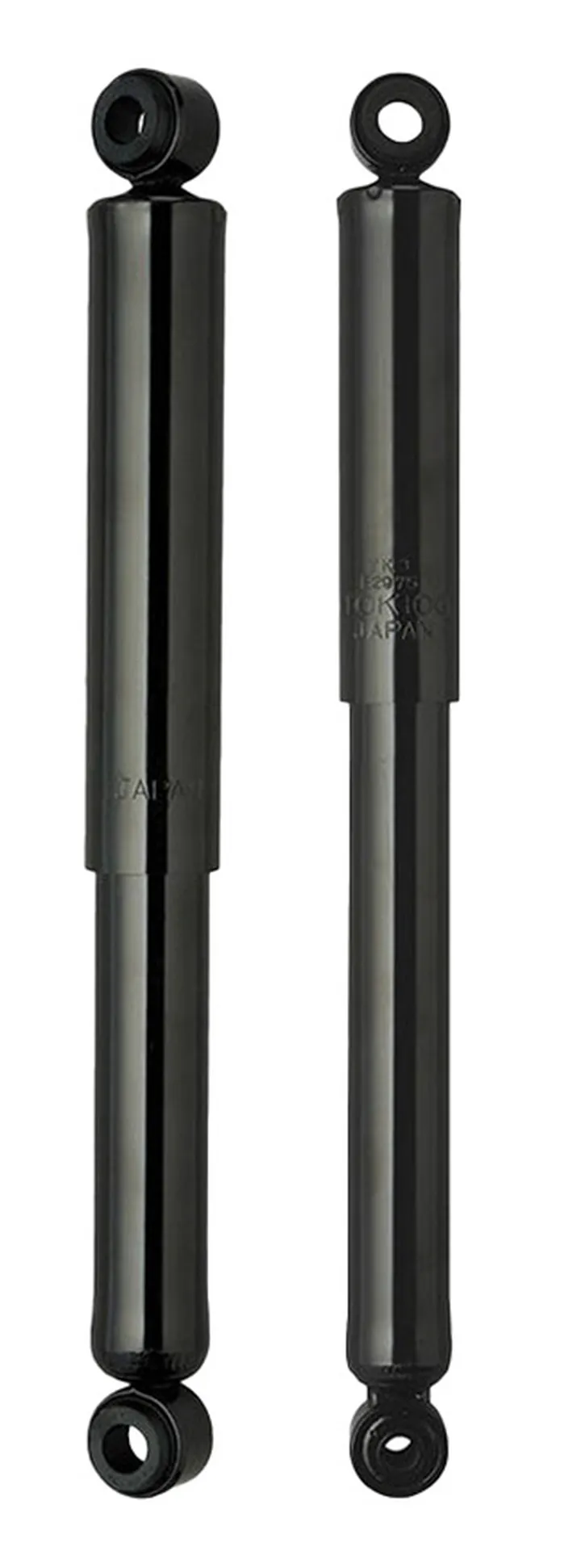
A shock absorber damps the oscillation of the springs so the tyres stay in contact with the road. When it wears, the car bounces longer after bumps, dives under braking, sways in corners, wears its tyres unevenly and may leak fluid. Worn units are replaced in pairs on the same axle.
What a shock absorber does
The springs of a suspension store the energy of a bump; without damping they would keep oscillating. A shock absorber uses valved oil and gas to absorb that excess energy, which is its main purpose. In practice this means it:
- reduces bouncing after bumps or potholes;
- keeps the tyres in contact with the road, which is what steering control depends on;
- improves braking performance and steering response;
- absorbs road vibration for ride comfort;
- protects other suspension and steering components from repeated shock loads.
Signs that it is worn
Shock absorbers rarely fail at once. Damping fades gradually, so the signs are easy to get used to. The usual ones are:
| Sign | What is happening |
|---|---|
| The car keeps bouncing after a speed bump or railway crossing | The damper no longer absorbs the spring’s energy |
| The front dips under braking; the rear squats under acceleration | Weight transfer is no longer controlled |
| More body roll, swaying after lane changes or in crosswinds | Suspension movement is no longer damped |
| Cupped or scalloped tyre wear, hollowed patches in the tread | The tyre bounces instead of staying planted |
| Oily residue or clear to light-brown fluid on the damper body | The rod seal has failed and fluid is escaping |
| Knocking or banging over bumps | Worn bushings or mountings let the unit move |
| Longer stopping distances | Less tyre contact under braking |
What a workshop checks
A technician looks for leaks and damage on the damper body, checks the mountings and bushings, looks at the tyre wear pattern, and assesses on a road test how well the suspension settles after a bump. One tyre retailer recommends a check every year, at every alignment or tyre change, and whenever the ride feels different.
Why they are replaced in pairs
Shock absorbers are replaced in pairs on the same axle, both front or both rear. A new unit next to a worn one gives uneven damping from side to side, which affects handling and braking stability. Fitting a matched pair keeps the axle balanced.
Choosing the replacement
Identify the vehicle, the axle and the fitting position (left, right or both sides), and note the OE reference number on the part being removed; front units in particular may be a shock absorber, a strut cartridge or a complete strut depending on the vehicle. Trade customers can request the matching ZEIK reference and OE cross-references by email.